When and How to Stain or Seal a New Wood Fence in West Tennessee
The question is not how soon you can stain. It is whether the wood can take the finish yet, and there is a quick way to check.
When can I stain a new wood fence? When the wood is dry enough to drink the finish. New pressure-treated boards are wet, so test it: sprinkle water on a board. If it soaks in, the wood is ready. If it beads up, wait. Viance, a preservative maker, says that typically takes about two months, but weather decides.
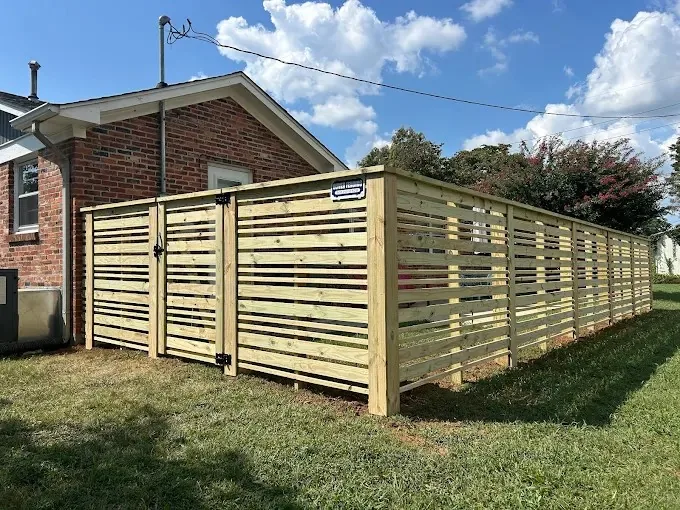
A brand new fence looks like it is begging for stain. Clean wood, fresh lines, and the neighbors' fences all look tired next to it. The natural question is how soon you can put the finish on.
The better question is whether the wood is ready, not what the calendar says. A finish goes on wood, and if the wood cannot take it, you may have paid for a coat that peels.
This guide covers the timing, the simple test for readiness, which kinds of finish work on a fence and which do not, and what changes in West Tennessee's humid weather. If you would rather hand it off, our fence staining and sealing service page covers the finish work.
Get a free estimate
Call or text Greg at (731) 240-8701, or use the form. Photos of your yard help.
Free on-site estimates in Jackson & West Tennessee.
Why New Treated Wood Has to Wait
Many wood fences are built from pressure-treated lumber, and that is the case this guide is mostly about. According to Viance, a maker of wood preservatives, pressure treatment with waterborne preservatives does leave some moisture in the wood, and that can affect how stain and paint penetrate and dry. The Forest Products Laboratory is blunter: lumber treated that way generally holds large quantities of water when it reaches the lumber yard, so make certain it is dry before finishing. It says drying may take days or weeks, depending on how wet the wood is and the drying conditions.
As general finishing practice, a penetrating finish needs wood that can absorb it. On wood that is still wet it tends to sit on the surface, and a coat like that can peel or turn blotchy.
Cedar is a different case. Tennessee 811 calls it a decay-resistant species, and as general trade knowledge it is not normally pressure treated, so the waterborne moisture above is a different story. We have no source for a cedar timeline. The same test applies. Check the wood, not the calendar.
The Water Test
This is the quick way to find out, and you can do it yourself in a minute.
Pick a few boards in the sun
Try one board that gets full sun and one in shade, since in general they dry at different speeds.
Sprinkle a few drops of water
Use a spray bottle or your fingers. Do it on a day without rain, and not right after a downpour.
Watch what happens
If the drops soak in readily, the wood can take a finish. If they bead up and sit there, the wood is still too wet. Wait and test again.
Viance describes it the same way. It says to test with a few drops of water and notes that treated wood is typically ready for finishing 60 days after installation. It also says that depends on how long ago the lumber was treated, sun, temperature and recent weather. That is a typical, not a rule. A fence built in a dry October and a fence built in a wet March do not follow the same schedule.
Which Finish Holds Up on a Fence
The Forest Products Laboratory has studied exterior wood in the South, and its advice on fences is clear.
- Semitransparent penetrating stains and water-repellent preservatives with a mildewcide are the preferred choice. They soak in without forming a film, so they do not crack or peel the way a surface coating does.
- Solid-color stains and varnish are not recommended for exterior fences. The lab says they will not stand up to sun and rain and will need frequent refinishing.
- Paint is possible but demanding. The lab's method is a paintable water-repellent preservative on the surfaces, ends and joints, at least two warm sunny days to dry, then a stain-blocking acrylic latex primer and two topcoats of acrylic latex.
Viance adds that you should use a high-quality oil or water-based finish with UV protection to slow graying, and that semitransparent stains are best for color. It also says most water-repellent coating makers recommend annual application. Whatever you choose, follow the label on the product.
Treat the Ends and Joints
The Forest Products Laboratory says to use water-repellent treatments on fences and decks to reduce surface checking and cracking, and to treat ends and joints liberally. In general, end grain takes on water more readily than the face of a board, and where a board meets a rail, water can get in and stay. Those are common trouble spots, so they are the places to put the product.
Get a free estimate
Call or text Greg at (731) 240-8701, or use the form. Photos of your yard help.
Free on-site estimates in Jackson & West Tennessee.
What West Tennessee's Weather Changes
Jackson's humid subtropical climate, with plenty of rain through the year, matters in two ways.
First, mildew. The Forest Products Laboratory calls it a particularly serious problem with unfinished wood in humid areas of the South. A fence left bare is the case the lab is describing. That is why a finish with a mildewcide is on the preferred list. We have a separate guide to mildew and gray blotches on a wood fence for fences that already have it.
Second, renewal. The lab says the first water-repellent coat on smooth surfaces is short-lived and may need renewing fairly often in the first few years, while weathered boards hold a coat longer. A blotchy fence is a sign it is time to clean it and treat it again once it has dried.
One more caution. The building codes list Madison County's weathering rating as negligible and the City of Jackson's as moderate. Those are design numbers for houses. Neither one is a rule about finishing a fence, and we have found no rule that requires a stain.
A Plain Schedule
- Have the fence built. Leave it alone while it dries.
- Start testing with the water drops a month or so in, and test again every couple of weeks. That pace is general advice, not a published rule.
- When the wood drinks the water, check the forecast. As general practice, you want a dry stretch before and after.
- Clean the fence if it has picked up dirt or early mildew. Let it dry fully.
- Apply a semitransparent penetrating stain or a water-repellent preservative with a mildewcide. Work the ends and joints.
- Look at it each spring and renew when water stops beading, or on the label's schedule.
You can leave it unfinished, but know what the lab says: "Wood should not be allowed to weather naturally in the South because of the warm, humid climate. Mildew is sure to develop, followed by moss." The summer humidity and warping guide explains what that first summer does to boards.
Mistakes That Waste a Coat
- Staining on a schedule instead of a test. The wood is either ready or it is not, and the calendar does not know the difference.
- Choosing a solid color for looks. It hides the grain, and per the Forest Products Laboratory it is the type that wears and needs frequent refinishing on a fence.
- Skipping the ends. The lab says to treat ends and joints liberally.
- Coating over mildew. The lab says mildew can grow through a new coat. Clean it off and let the wood dry first.
- Working in bad weather. Check the product label for weather limits, and pick a dry stretch.
None of this is complicated. It just rewards patience, which is hard when the fence looks so good new.
Common Questions About Staining a New Fence
Can I stain a pressure-treated fence right after it is built?
+Usually not. New treated lumber is wet, and the Forest Products Laboratory says to make certain it is dry before finishing. Do the water-drop test. If drops soak in, go ahead. If they bead up, wait.
How long should I wait?
+Viance says treated wood is typically ready about 60 days after installation, but it depends on when the lumber was treated, sun, temperature and recent weather. The Forest Products Laboratory says drying may take days or weeks. Test the wood instead of counting days.
Should I use a solid stain or a clear sealer?
+For a fence, the Forest Products Laboratory prefers semitransparent penetrating stains or water-repellent preservatives with a mildewcide, and does not recommend solid-color stains or varnish. The lab says solid-color stains and varnish will not withstand sun and rain and need frequent refinishing.
Does a stain stop mildew?
+A finish containing an effective mildewcide helps. It does not make the fence immune, especially in shade and where plants touch the boards. Clean and re-treat when blotches appear.
How often does a fence need to be re-stained?
+Follow the product label. Viance says most water-repellent makers recommend annual application, and the Forest Products Laboratory says the first coat on smooth boards is short lived. When water no longer beads on the wood, it is a sign the finish has worn.
If You Want Help
Whoever does the finishing, the order matters: build, let the wood dry, test it, then finish, so nobody pays to coat wet boards. See wood fencing for the species and board choices, and the fence lifespan guide for how maintenance changes the picture. If you are planning a build, fence installation in Jackson is where to start.
Get a free estimate
Call or text Greg at (731) 240-8701, or use the form. Photos of your yard help.
Free on-site estimates in Jackson & West Tennessee.
More plain-English answers on cost, permits, materials, and repairs are in all of our fence guides.