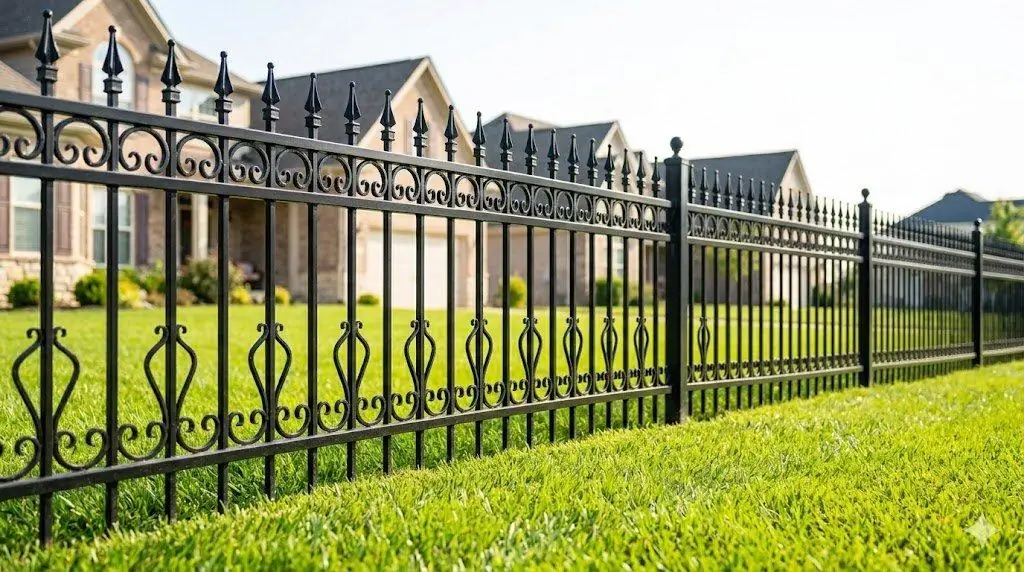
Ornamental Iron Fence Installation in Jackson, TN
Welded steel panels and custom gates for front yards, estate entries, and property lines that need to look substantial.
Ornamental Iron Fencing for Jackson and West Tennessee Properties
Ornamental iron is what people picture when they think of a fence that looks like money. Welded steel pickets and rails, a spear or flat top, and gates with real weight to them. What gets sold as ornamental iron today is usually welded steel rather than hand-forged wrought iron, and that's fine. Modern steel with a good coating performs better than the old stuff did. We install it across Jackson and out through Madison County, mostly on front yards, entry drives, and pool surrounds.
Steel is heavier and stiffer than aluminum, which is the whole reason to pick it. It takes an impact without deforming, it holds a wider gate span without sagging, and it reads as more substantial from the street. The tradeoff is rust. Steel contains iron, so anywhere the coating gets broken, by a string trimmer or a thrown rock, corrosion starts and works its way under the finish. That's not a reason to avoid it. It's a reason to keep an eye on it.
Get a free estimate
Call or text Greg at (731) 555-1234, or use the form. Photos of your yard help.
Free on-site estimates in Jackson & West Tennessee.
Who an iron fence is for
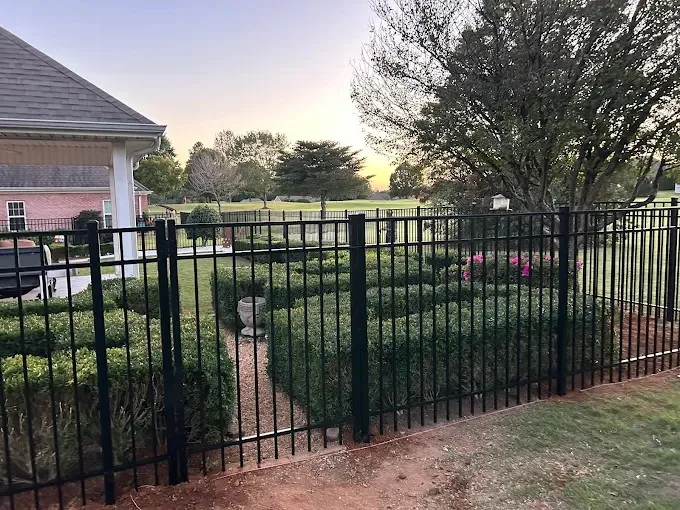
Iron suits the property where the fence is part of how the place presents itself. A front yard on a corner lot, a drive entry with masonry columns, a courtyard, a pool enclosure that needs to look like more than a barrier. It's also the right answer when you need strength: wide double drive gates, a fence line that gets bumped, or a run that has to resist someone climbing it.
It's the wrong call if you want privacy, because you can see straight through it. For screening, privacy fencing is the answer. It's also the wrong call if you want zero maintenance. If the look is what you're after but you'd rather never touch it again, aluminum fencing gives you the same visual language with no rust risk, at a lower price. Plenty of people compare the two and choose aluminum, and we build either.
Styles and options we build
The picket top and the rail count do most of the work in how a panel reads.
- Spear top. Pickets extend past the top rail into points or finials. The classic estate look, and harder to climb.
- Flat top. Pickets stop level with the rail. Cleaner, more modern, and the friendlier choice around children.
- Two-rail and three-rail. The third rail adds stiffness and suits taller panels. Most residential heights do fine on two.
- Puppy picket. Extra pickets in the bottom section so small dogs can't squeeze through.
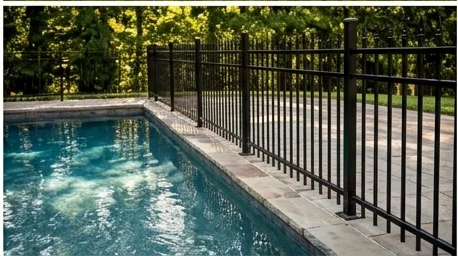
- Pool configuration. Picket spacing and bottom clearance set to meet barrier rules, with self-closing, self-latching hardware. See pool fencing.
- Custom gates. Arched tops, scrollwork, cast finials, and matching pedestrian gates. This is where iron pulls away from every other material.
Black is what nearly everyone picks, and it's the right answer against brick or a tree line. Bronze and dark green come up occasionally. Any drive gate can be built to accept an opener later, and we'd rather pre-wire during the install than trench a finished yard twice. That work is on automatic gate installation.
How iron holds up in West Tennessee conditions
Heat and humidity are what iron cares about in a zone 7b climate like ours, because moisture plus exposed steel means rust. A factory powder coat over a galvanized or primed substrate handles that well, and iron's failures are almost always mechanical: a chip from a mower, a scrape where a gate drags, a weld that was never coated properly at the joint. Touch those up when they show and the fence is fine. Leave them and the corrosion spreads under the finish where you can't see it.
An iron fence handles wind better than any solid fence, because there's almost nothing for it to push against. That's worth something here. This town's storm record is not theoretical: two F4 tornadoes and an EF4, one of them through the Union University campus. An open picket fence gives a storm very little to load up on, and the failure mode tends to be a bent panel rather than a whole run laid over. Repair after a storm is covered on storm damage.
The ground is the harder problem. Our uplands are Gulf Coastal Plain ground under wind-blown loess, silt fine enough that a hole cuts fast and drains slow once the sides get packed. It holds water and shifts as it wets and dries, and that shifting walks posts out of plumb. Iron panels are rigid, so a post that moves shows up as a visibly crooked panel rather than a gentle bow. Footings need proper depth, a shape that can't be lifted, and drainage. More in fence posts in West Tennessee soil.
What it costs, roughly
We don't post prices, because iron varies more by specification than any other material we install. What moves the number:
- Total footage. Still the biggest factor.
- Height and rail count. Taller panels use more steel and want a third rail.
- Gates. This is where iron budgets go. A custom arched drive gate can cost more than a long stretch of fence.
- Panel weight and grade. Residential versus commercial-weight steel is a real jump in both material and labor.
- Grade of the ground. Sloped ground gets stepped or ordered as raked panels, and both add cost.
- Old fence removal. Pulling an existing fence and its footings adds labor and disposal.
Ranked against each other locally: chain link is the least expensive fence we build, then treated pine privacy, then cedar. Vinyl and aluminum land above wood. Ornamental iron is generally the most expensive of the common materials, and custom gate work is what pushes an iron project well past the rest. The Jackson fence cost guide walks through the estimate.
Maintenance and how long it lasts
Walk the fence a couple of times a year and look at the bottom of the pickets, the weld joints, and anywhere hardware rubs. Chips get cleaned, primed, and touched up with matching paint, and a chip caught early is a five-minute job. One left through a wet season becomes a rusted picket that has to be cut out and replaced. Keep mulch and soil off the bottom rail and keep the string trimmer away from the steel.
Kept coated, iron outlasts every other fence material we install, and it isn't close. Left uncoated where it's been chipped, it will fail before vinyl or aluminum would. That's the whole story on iron lifespan: it's a material whose life depends on attention rather than on weather. Aluminum needs none of that attention but won't take the same abuse. Comparisons in the fence lifespan guide and best fence materials for West Tennessee.
Get a free estimate
Call or text Greg at (731) 555-1234, or use the form. Photos of your yard help.
Free on-site estimates in Jackson & West Tennessee.
Common questions about ornamental iron
Is this real wrought iron?
+Almost nothing sold as ornamental iron today is true hand-forged wrought iron. It's welded steel with a powder-coat finish, and it performs better than historic wrought iron did. If you need actual forged work for a historic property, that's a specialty fabrication conversation and a different budget.
Iron or aluminum, which should I pick?
+Iron if you need strength, a wide gate span, or the heavier look. Aluminum if you want the same style with no rust risk and less money. Aluminum has no iron in it, so it can't rust the way steel does, and that's its real advantage. Most residential front yard and pool jobs are served fine by aluminum.
Do I need a permit for an iron fence in Jackson?
+Inside city limits, yes. Jackson requires a fence permit application with a fee and asks for a boundary survey or a signed neighbor agreement. The front-yard sight-line rule matters here: in a required front yard, a fence can't materially impede vision above two and a half feet. An open picket fence usually satisfies that where a solid one would not. See the permit guide.
Can an iron fence go around a pool?
+It's one of the most common uses. Tennessee has a statewide residential pool barrier statute, and barriers have specific requirements for height, picket spacing, gaps at the bottom, and self-closing, self-latching gates. We build to whatever applies to your pool and confirm the current requirements before we order. More on pool fence requirements.
What happens to an iron fence on a slope?
+Two options. Step the panels down the grade, which leaves a small gap under each section, or order raked panels built to the measured slope so the rails follow the ground while the pickets stay plumb. Raked panels look better and cost more because they're made to your survey.
How we work
Nobody hands you off to a salesman. We walk the property, look at the grade and the drainage, settle the line and the gate openings, and hand you a written quote with the panel spec and the gate details named.
Then we call the utility locate. Tennessee law requires notifying 811 at least three full business days before any digging, hand tools included. After that it's posts, cure time, panels, and gate hanging. New construction is on fence installation, gates on gate installation and repair.
Call or text Greg at (731) 555-1234 to set up a walkthrough.